How to Run Doctor Consent-Based Video Campaigns That Actually Convert
Gourab Paul
May 21, 2026
Doctor consent for video-based pharma communications is one of those compliance requirements that pharma marketing teams know exists and handle inconsistently. Some companies treat it as a bureaucratic box to tick. Others have not figured out how to operationalise it at scale and quietly proceed without it. A small number have built proper consent infrastructure and are running the most commercially effective video programmes in their therapy areas as a result.
The third group is right, and not just for compliance reasons. Consent-based video campaigns outperform non-consent-based outreach on every measurable engagement metric. Doctors who have opted in to receive video content from a brand have told you something important: they are open to hearing from you. Every view, every replay, every share from a consented doctor carries a different commercial weight than the same action from a doctor who has not opted in.
This piece is a practical guide for running doctor consent-based video campaigns that actually convert, covering the consent architecture, the content strategy, the distribution mechanics, and the measurement framework.
Why Consent Is Not Just a Compliance Obligation
The legal case for consent-based HCP outreach in India rests on multiple regulatory layers. TRAI's Unsolicited Commercial Communications regulations apply to SMS and voice calls. WhatsApp Business API terms require that businesses only message users who have opted in. UCPMP requires that promotional communications be directed at healthcare professionals in a compliant manner. The DPDP Act 2023 (Digital Personal Data Protection Act) establishes clear consent requirements for processing personal data in commercial communications.
The compliance case is clear. But the commercial case is equally compelling and less frequently discussed.
A consent-based HCP database is a fundamentally different asset than a bulk-acquired doctor list. The doctors in a consented database have expressed an interest in receiving information from your brand or therapy area. Their engagement rates are structurally higher because the baseline attitude toward receiving your communications is positive rather than neutral or negative. The conversion from engagement to prescription conversation is more efficient because you are not spending engagement budget on doctors who have no interest in hearing from you.
Over time, a well-built consented HCP audience compounds in value. Each interaction adds to the engagement history. The AI personalisation layer gets better at predicting what each doctor wants to see next. The relationship deepens in a way that bulk-outreach programmes cannot replicate because they lack the consent foundation and the engagement history that makes compounding possible.
Building Your Consent Architecture
The consent architecture for a pharma video programme has two parts: the mechanism for capturing consent and the system for managing and honouring it.
The consent capture mechanism works best when it is embedded in existing touchpoints rather than presented as a standalone ask. The most effective approaches are MR-assisted consent collection during routine calls, where the MR presents a simple opt-in on a tablet or via a QR code as part of the call flow. This approach works because the relationship context makes the ask natural, and the MR can answer any questions about what the doctor is consenting to receive.
Other effective consent capture mechanisms include opt-in forms on brand microsites, consent collection at CME events and medical conferences, and digital opt-in flows triggered by initial engagement with brand content. The common element in all effective mechanisms is that the consent request is specific about what the doctor is agreeing to receive, which channels it will come through, and how they can withdraw consent at any time.
The consent management system needs to be integrated with the distribution platform so that only consented doctors receive video content through consent-required channels. This sounds obvious but the operational reality is that many pharma companies maintain consent records in a separate CRM or spreadsheet that is not connected to the WhatsApp or email distribution system. When these systems are disconnected, the consent infrastructure exists on paper but does not function in practice.
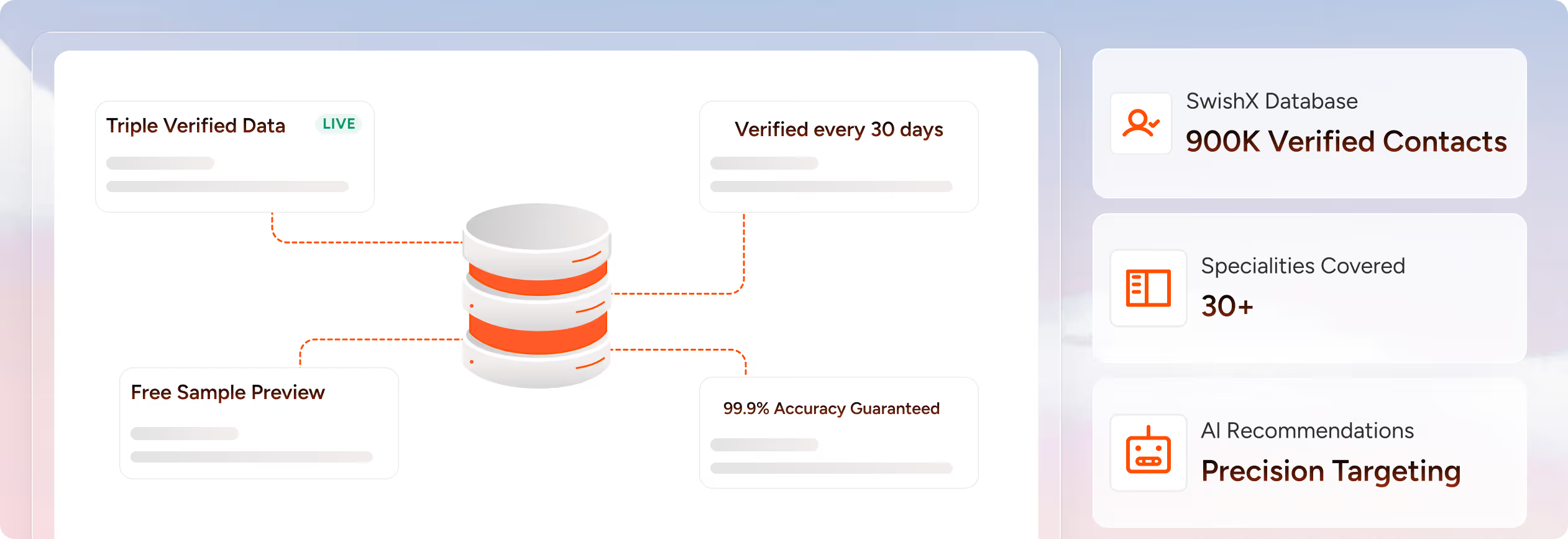
SwishX's Marketing IQ manages consent as a built-in attribute of each HCP profile in the database. Distribution through WhatsApp and email channels is governed by consent status at the individual level, and the system maintains the audit trail required to demonstrate compliance with both UCPMP and DPDP requirements.
Content Strategy for Consented HCP Audiences
The content strategy for a consent-based video programme should reflect the fact that you are talking to an audience that has opted in to hear from you. This changes the appropriate tone and depth of the content.
For a consented specialist audience, the content can assume a level of clinical familiarity that general awareness content cannot. A cardiologist who has opted in to receive content about your heart failure molecule does not need to watch a basic disease overview. They want mechanism of action detail, comparative efficacy data, patient selection criteria, and safety information that helps them use the product optimally for the right patients.
The content sequencing for a consented HCP audience should follow the engagement history. A doctor who has watched the mechanism of action reel should receive the clinical evidence reel next, not the product introduction reel again. A doctor who has requested the full clinical study should receive the dosing and titration guidance next. The content journey should be structured around where each doctor is in their clinical understanding of the product, not where your content calendar says you are in your campaign schedule.
Video format works best for mechanism of action, clinical evidence highlights, and patient case examples. PDFs and detailed leave-behinds work better for complete prescribing information, safety profiles, and reference material. A well-designed video programme uses both, with the video content creating engagement and awareness and the detailed reference material serving the clinical decision-making step.
Distribution Mechanics That Drive Conversion
The distribution mechanics for a consent-based video campaign require more precision than a bulk-send programme. Because the audience is smaller and more valuable, every distribution decision carries more weight.
Timing matters significantly for video content engagement. Doctors who receive WhatsApp video content during OPD hours show lower completion rates than those who receive it in the morning before clinic starts or in the early evening. The optimal send timing varies by specialty and geography and should be informed by observed engagement patterns from previous campaigns rather than assumed from general best practices.
Frequency needs to be calibrated to consent type and engagement behaviour. A doctor who has opted in for weekly video updates expects weekly content. A doctor who has opted in for general brand communications should receive content no more than once every two weeks unless their engagement pattern suggests they want more. Over-sending to a consented audience is the fastest way to lose the consent.
Re-engagement for non-responders within a consented list requires a different approach than first-contact outreach. A doctor who consented three months ago and has not engaged with any content since is telling you something. The re-engagement content should be different: shorter, more direct, and calibrated to the reason they might have disengaged rather than continuing the standard sequence as if nothing has happened.
Measuring Conversion in a Consent-Based Programme
The measurement framework for a consent-based video campaign should track the full funnel from consent through to prescription behaviour change, not just the engagement metrics at each stage.
Consent conversion rate: what percentage of doctors in your target universe have given consent? This is your addressable audience metric and it determines the ceiling on everything else in the programme.
Engagement rate within the consented list: what percentage of consented doctors are actively engaging with content? Doctors who have consented but are not engaging represent an audience that needs to be re-engaged or re-qualified.
Content completion rates by format and topic: which video types are driving completion and which are losing viewers mid-way? This is your content quality signal and it should directly inform the next production cycle.
Prescription conversion: of the doctors who are actively engaging with your video programme, what percentage are active prescribers? What is the prescribing behaviour trajectory of high-engagement HCPs compared to low-engagement HCPs in the same specialty and geography?
This last metric is the one that justifies the consent infrastructure investment. Programmes that measure it consistently report that high-engagement consented HCPs prescribe at materially higher rates than their matched peers who are not in the programme. The delta is the commercial return on the consent architecture investment.
For the broader measurement framework on how digital engagement connects to field force and prescription outcomes, read our piece on activity versus impact.
Yes. WhatsApp Business API terms require that businesses only message users who have explicitly opted in to receive communications. Additionally, the DPDP Act 2023 establishes consent requirements for processing personal data in commercial communications, and UCPMP requires that promotional materials be distributed in a compliant manner. Operating without consent infrastructure creates both regulatory exposure and commercial inefficiency.
MR-assisted consent collection during routine calls is the most effective mechanism, because the relationship context makes the opt-in request natural and the MR can address questions. Other effective approaches include opt-in forms on brand microsites, consent collection at CME events, and digital opt-in flows triggered by initial content engagement. The consent request should be specific about what the doctor is agreeing to receive and how they can withdraw at any time.
Content for a consented specialist audience should assume clinical familiarity and follow the individual doctor's engagement history. A doctor who has watched the mechanism of action reel should receive clinical evidence content next, not the product introduction again. The content journey should be sequenced around where each doctor is in their clinical understanding, not around your campaign calendar.
Consent-based campaigns consistently outperform bulk outreach on every engagement metric: open rates, completion rates, replay rates, and share rates are all higher for consented audiences. More importantly, the conversion from engagement to prescription conversation is more efficient because consented doctors have already expressed openness to receiving information. Over time, the compounding engagement data from a consented audience creates a personalisation advantage that bulk outreach programmes cannot replicate.




.avif)







.svg.avif)