Omnichannel Pharma Marketing: Building a Strategy That Actually Works
Dushyant Sapre
May 26, 2026
The phrase omnichannel pharma marketing has been in strategy decks for the better part of a decade. It has also, for most of that time, described a goal that very few pharma companies were actually achieving. The word omnichannel implies coordinated, seamless, data-connected engagement across multiple channels. What most companies were actually running was multichannel, which is something meaningfully different: the same message pushed through several channels independently, with no connection between what happens on one channel and what happens on another.
The distinction matters because the commercial outcomes are different. Multichannel creates duplication and noise. Omnichannel creates reinforcement and relevance. And in a market where doctor attention is the scarcest resource in the pharma marketing equation, the difference between duplication and reinforcement determines whether your marketing spend is building brand equity or diluting it.
This piece is a strategy guide for pharma marketing teams who want to build an omnichannel programme that actually works, not one that looks omnichannel on a slide deck but behaves multichannel in practice.
Why Most Pharma Omnichannel Programmes Are Actually Multichannel
The fundamental gap between multichannel and omnichannel pharma marketing is data connectivity. In a genuine omnichannel programme, what happens on each channel informs what happens on every other channel. A doctor who engages with a mechanism of action video on WhatsApp and does not convert to a prescription conversation should receive a different follow-up email than a doctor who watched the same video twice and then asked the MR for a clinical study. The engagement history on one channel shapes the interaction on the next.
In a multichannel programme, the WhatsApp team, the email team, and the MR team are each running their own engagement tracks independently. The WhatsApp sends go out on a schedule. The email campaign runs on its own calendar. The MR visits the doctor according to their beat plan. There is no data flowing between these touchpoints. A doctor who has explicitly disengaged from your brand's WhatsApp content receives the same MR visit and email as a doctor who has been engaging deeply. The channels are parallel tracks, not a connected system.
Most pharma companies are running the second model, regardless of what their marketing strategy documents call it. The reason is usually organisational rather than technical. The WhatsApp programme is owned by one team. The email programme is owned by another. The field force sits in the sales organisation. Getting these teams to operate from a shared HCP engagement data model requires both technical integration and organisational alignment, and most companies have prioritised neither sufficiently.
The Architecture of a Working Omnichannel Strategy
A pharma omnichannel strategy that produces genuine commercial outcomes is built on three foundational elements: a unified HCP engagement data model, a content system with the depth to serve multiple channels and audience states, and an orchestration layer that connects channel actions to engagement signals in real time.
The unified HCP data model is the most foundational. Every interaction a doctor has with your brand, whether through a WhatsApp video, an email, an MR visit, a CME event, or a microsite, should update a single engagement record for that doctor. The record tracks what was shown, what was engaged with, what was requested, and what was ignored. This record is what makes omnichannel coordination possible. Without it, each channel is working from its own incomplete picture of the relationship.
The content system needs depth across two dimensions: topic coverage and audience state. Topic coverage means having content for each stage of the prescribing journey, from awareness through to preference and habit. Audience state means having different content for doctors who are early in their engagement with a brand versus those who are already prescribers being maintained. Omnichannel coordination without this content depth just means coordinating the same limited content across more channels, which produces coordinated noise rather than coordinated relevance.
The orchestration layer is where the strategy becomes operational. This is the system that determines, based on each HCP's current engagement state, which channel to use next, with what content, at what cadence. It is the layer that stops an MR from visiting a doctor with generic detailing materials two days after that doctor watched a clinical evidence reel and sent a follow-up question. Instead, the MR's pre-call brief surfaces the engagement, the question, and the recommended response content.
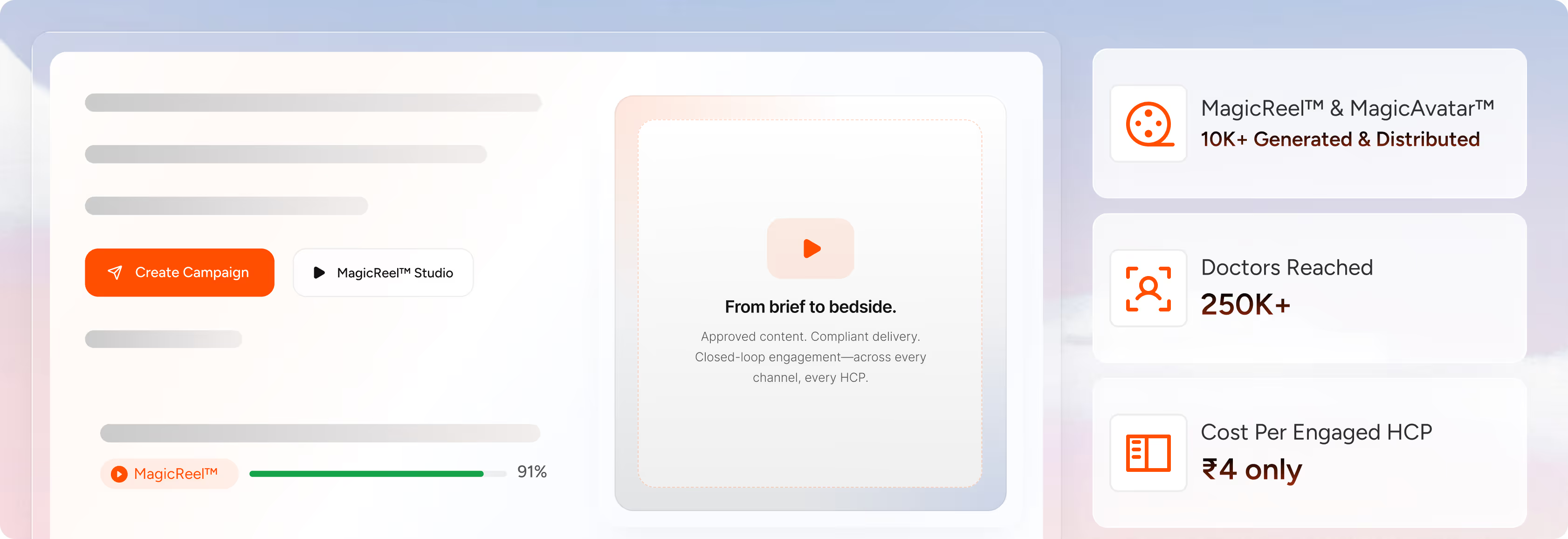
SwishX's Marketing IQ is built around this architecture: verified HCP data, a content system that generates multiple format variants from approved source documents, and an orchestration layer that manages WhatsApp, email, SMS, and rep-assisted channels from a single workflow.
Channel Roles in a Pharma Omnichannel Strategy
Different channels serve different functions in a well-designed pharma omnichannel programme. Understanding these roles prevents the common mistake of using every channel for the same purpose and wondering why the aggregate engagement is flat.
WhatsApp is the primary engagement channel for HCP outreach in the Indian pharma context. It has the highest open rates, the most natural fit with how Indian doctors consume information in practice, and the best format support for short video content. In an omnichannel strategy, WhatsApp is the top-of-funnel engagement driver, used for initial content delivery, re-engagement of dormant HCPs, and rapid response to new clinical developments.
Email serves a different function. It is better suited for structured, longer-form content: clinical study summaries, safety updates, CME announcements, and detailed product information for HCPs who have already shown intent. Email open rates are lower than WhatsApp but the engagement depth when doctors do engage is higher, which makes it the right channel for second and third stage engagement with interested HCPs.
SMS is a high-reach, low-cost channel for time-sensitive communications: appointment reminders, event registrations, sample availability notifications. It should not be used for rich content delivery but is effective for directing attention to other channels.
Rep-assisted engagement remains the highest-conversion channel for established specialist relationships. In an omnichannel strategy, MR visits are most productive when they are timed to follow high-engagement digital touchpoints and briefed with the doctor's specific engagement history. An MR walking in two days after a doctor watched a safety profile reel twice and shared it with a colleague is in a fundamentally different conversation than an MR visiting on a routine beat cycle with no information about recent engagement.
Measuring Omnichannel Effectiveness
The measurement framework for a genuine omnichannel programme is more complex than channel-by-channel reporting, but the incremental analytical investment is worth it because the insights are qualitatively different.
At the channel level, track the standard metrics: open rates, completion rates, click-throughs, and reply rates by HCP segment. These tell you how each channel is performing for each audience type. At the journey level, track the engagement sequences that lead to the highest conversion to prescription conversation. These tell you which channel combinations and content sequences are most effective for moving HCPs through the prescribing funnel. At the outcome level, track the correlation between engagement patterns and downstream prescribing behaviour. This is harder to measure and requires connecting the engagement data to prescription data, but it is the metric that justifies the investment.
For a deeper look at how field force activity data connects to commercial outcomes in this kind of integrated measurement framework, read our piece on activity versus impact.
Multichannel pharma marketing uses several channels independently, with no data connection between them. Each channel runs its own engagement track without reference to what is happening on the others. Omnichannel pharma marketing uses a unified HCP engagement data model so that what happens on each channel informs what happens on every other. The practical difference is that omnichannel produces reinforcement and relevance where multichannel produces duplication and noise.
WhatsApp is the primary engagement channel for initial content delivery and re-engagement. Email serves second and third stage engagement with interested HCPs who want more detailed clinical information. SMS is effective for high-reach, time-sensitive notifications. Rep-assisted engagement remains the highest-conversion channel for established specialist relationships, particularly when briefed with digital engagement data.
Effective omnichannel measurement operates at three levels: channel level (standard engagement metrics per channel per HCP segment), journey level (which channel sequences drive conversion to prescribing conversations), and outcome level (correlation between engagement patterns and downstream prescribing behaviour). The journey and outcome level metrics require connected data infrastructure that most multichannel programmes do not have.
In a well-designed omnichannel strategy, MR visits are timed to follow high-engagement digital touchpoints and briefed with the doctor's specific digital engagement history. The MR's function shifts from delivering general brand awareness to facilitating a specific clinical conversation informed by what the doctor has already engaged with. This makes each MR visit materially more productive than a visit conducted without engagement context.



.avif)


.png)





.svg.avif)