Pharma Marketing Compliance with AI: Staying on the Right Side of CDSCO and UCPMP
Piyush Agarwal
May 21, 2026
Every pharma brand manager in India has heard about UCPMP. Most can name at least a few of the rules. Almost none of them feel genuinely confident that their current marketing programme is fully compliant with it at all times, across all channels, for all content in circulation.
This confidence gap is not usually the result of deliberate non-compliance. It is the result of a compliance process that was designed for a content production rate and channel complexity that no longer reflects reality. When your team is producing content for eight therapy areas across WhatsApp, email, and in-clinic materials, and the approval workflow was designed for a world where two product brochures went out per quarter, the process is structurally unable to keep up.
AI is changing this. Not by loosening compliance standards, but by making it operationally possible to maintain those standards at the content volume and channel complexity that modern pharma marketing actually requires.
What UCPMP Actually Requires
The Uniform Code for Pharmaceuticals Marketing Practices is the industry self-regulatory framework governing how pharmaceutical companies promote their products to healthcare professionals in India. It is not a light-touch voluntary code. Violations carry reputational consequences and increasingly attract attention from CDSCO, which has referenced UCPMP compliance in its regulatory communications.
The key requirements that affect day-to-day pharma marketing operations are worth being specific about. All promotional materials must be consistent with the approved prescribing information. Claims must be accurate, balanced, fair, and based on up-to-date evaluation of all available evidence. No promotional material may be distributed without prior approval from the company's medical or scientific department. All materials must carry mandatory information including the generic name of the product, approved indications, contraindications, and side effects.
Off-label promotion is prohibited. Promotional materials cannot be disguised as scientific or educational content. All promotional activities involving HCPs must comply with restrictions on hospitality, gifts, and samples. And companies must maintain records of all promotional materials distributed, which can be requested by regulators.
The operational implications of these requirements are significant. Every piece of content, whether it is a WhatsApp message, a video reel, a leave-behind PDF, or an email, requires review and approval before distribution. The volume of content that pharma marketing teams now produce means this review process is either a permanent bottleneck or, in practice, gets bypassed under deadline pressure. Neither outcome is satisfactory.
Where AI Compliance Tools Actually Help
The most valuable thing AI does in the pharma compliance context is not compliance checking after the fact. It is building compliance into the content creation process itself, so that the output is already aligned with UCPMP requirements before it reaches the human review stage.
When content is generated from approved source documents, as is the case with tools that convert product monographs into promotional content, the claim base is inherently constrained to what has been approved. The AI cannot introduce an off-label claim if the source document does not contain one. It cannot make a comparative efficacy claim that is not in the prescribing information. The compliance work is front-loaded into the sourcing decision rather than being a downstream audit exercise.
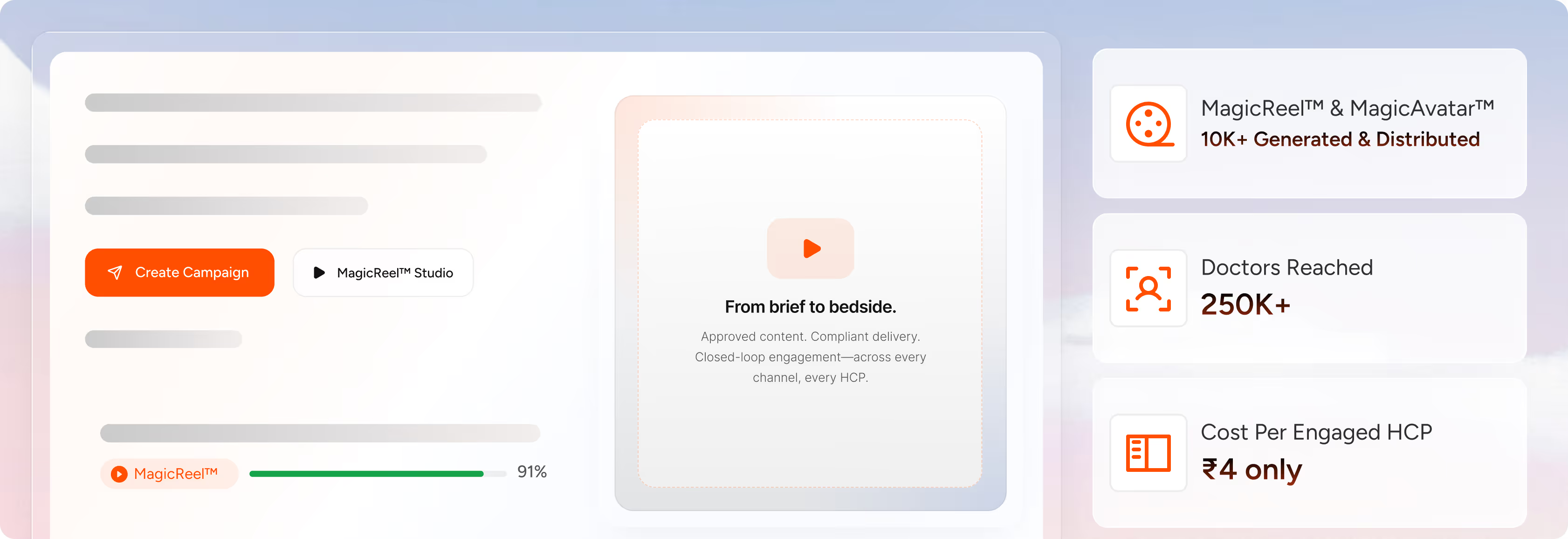
SwishX's Marketing IQ platform takes this further with a 3-stage approval workflow built into the content pipeline. Every asset generated through the platform, whether a MagicReel video, a campaign EDM, or a digital leave-behind, moves through marketing, medical, and regulatory review before it is eligible for distribution. The review chain is time-stamped and audit-ready. Nothing reaches an HCP without clearing all three stages.
The audit trail dimension is worth emphasising because it is often overlooked in compliance conversations that focus on pre-distribution review. The ability to demonstrate, on request, exactly what was sent to which HCP, when, in what format, and under which approval reference is increasingly important for regulatory preparedness. Manual tracking of this across WhatsApp, email, and MR distribution channels is practically impossible at scale. Platform-managed distribution makes it automatic.
CDSCO Guidelines and the Expanding Digital Perimeter
CDSCO's regulatory focus has expanded in recent years to include digital channels in ways that were not explicitly covered in older guidance frameworks. The principle that all promotional communications to HCPs must meet the same standards regardless of channel has been restated in various CDSCO communications, and enforcement attention on digital pharma marketing has increased.
This is relevant for pharma marketing teams that may be operating under the informal assumption that WhatsApp messages or social media content occupy a grey zone outside formal promotional regulation. They do not. A WhatsApp video sent to a doctor by an MR is a promotional communication subject to the same UCPMP standards as a printed brochure. If it contains claims that are not in the approved prescribing information, it is non-compliant regardless of the channel through which it was delivered.
The practical consequence of this for pharma marketing teams is that the informal content pipeline, the WhatsApp messages, the self-made presentations, the materials sourced from regional teams without central approval, represents a compliance exposure that most companies are not fully accounting for. AI tools that centralise content creation and distribution through a compliance-governed workflow address this exposure directly by making it difficult to distribute non-approved content through official channels.
The 194R Framework for HCP Engagement
The 194R provisions governing the tax treatment of benefits provided to healthcare professionals have added another layer of compliance complexity to pharma marketing programmes. Activities that might previously have been classified as marketing expenses now require careful documentation to determine whether they constitute taxable benefits under 194R.
This affects how pharma companies structure HCP engagement activities, CME sponsorships, sample programmes, and other forms of professional interaction. The documentation requirements under 194R are best managed by the same systems that handle UCPMP compliance, since both require audit-ready records of what was provided to which HCP and when.
SwishX's Marketing IQ is built as 194R Ready, meaning the platform's record-keeping architecture supports the documentation requirements of both UCPMP and 194R compliance in a single system rather than requiring separate tracking processes for each regulatory framework.
Building a Compliance-First Content Culture
The technology layer is important but it is not sufficient on its own. Pharma companies that build genuinely compliant marketing cultures do three things that technology alone cannot do. They establish clear internal accountability for compliance at the campaign level, not just at the medical affairs level. They train marketing and MR teams on the practical implications of UCPMP, not just the abstract principles. And they create escalation processes that make it easy to flag potential compliance concerns before content goes into the distribution pipeline rather than after.
The combination of the right compliance culture and AI-powered workflow tools changes the operational reality of pharma marketing compliance from a periodic review exercise into a continuous, built-in process. The content that reaches HCPs is compliant not because of a final gate that catches non-compliant material, but because the entire production and distribution pipeline is designed to produce compliant outputs.
For pharma brand managers who want to understand how the compliance requirements interact with the broader HCP engagement strategy, our piece on how AI is transforming HCP engagement in pharma marketing covers that intersection in detail.
UCPMP requires that all promotional materials to HCPs, including digital content, be consistent with approved prescribing information, carry mandatory product information, be approved by the company's medical or scientific department before distribution, and not contain off-label claims. These requirements apply regardless of the channel, including WhatsApp messages and digital video content sent by MRs.
Yes. UCPMP applies to all promotional communications to healthcare professionals regardless of the channel through which they are delivered. A WhatsApp video or message sent by an MR is subject to the same compliance requirements as a printed promotional brochure. Companies whose MRs distribute informally created or unapproved content via WhatsApp carry the same compliance exposure as if that content had been distributed through formal channels.
AI compliance tools help in two ways: by generating promotional content from approved source documents (which constrains claims to approved prescribing information), and by building compliance review workflows into the content pipeline so that every asset clears medical and regulatory approval before distribution. The audit trail generated by platform-managed distribution also supports regulatory preparedness.
194R is a provision in the Indian Income Tax Act requiring companies to deduct TDS on benefits provided to resident professionals, including healthcare professionals. For pharma companies, this affects the tax treatment of HCP engagement activities, CME sponsorships, and sample programmes. Compliance with 194R requires detailed documentation of benefits provided to each HCP, which is best managed through the same system used for UCPMP compliance tracking.



.avif)







.svg.avif)